Jump To:
If you’ve ever stepped outside on a July afternoon in Round Rock and instantly regretted your wardrobe choice, you already understand the problem. Texas summers are hot, sticky, and long. That same humidity drifts into your home and settles into walls, attics, and crawl spaces. Mold absolutely loves it. Our team at Austin Fire & Flood handles enough summer mold calls in Round Rock to know exactly when the spike hits. If you ever need professional mold remediation, we’re available year-round, but summer is when most homeowners realize they have a problem.
Why Round Rock Summers Are a Mold Breeding Ground
Mold needs three things to thrive: moisture, organic material, and warmth. Round Rock summers hand it all three on a silver platter. Humidity here sits between 60% and 80%, climbing higher after storms. Every home has plenty of material to feed on, from drywall paper to wood framing to dust.
Mold can start colonizing within 24 to 48 hours when conditions are right. A small leak, clogged AC drain, or poorly ventilated bathroom can spiral into a real problem before you smell anything off.
Slab foundations are standard here, so we don’t deal with full basements. But slab edges, crawl spaces, and HVAC closets carry the same hidden risk, and clay soil expansion can create entry points for groundwater after heavy rain.

Indoor condensation is one of the first signs summer humidity is overwhelming your home.
How Summer Humidity Actually Triggers Mold
Mold spores are in the air outside your home and inside it right now, and that’s normal. The problem starts when those spores find a damp surface they can grow on. According to the EPA’s guidance on mold and health, controlling indoor moisture is the single most important step in preventing mold growth.
In Central Texas, summer humidity creates damp surfaces in ways most homeowners don’t expect. Your AC pulls humidity out of the air, but the runoff has to go somewhere. Cool drywall behind a vent sweats. A bathroom without a working exhaust fan stays soaked after every shower. Even your attic can hit dew point on a stormy August afternoon.
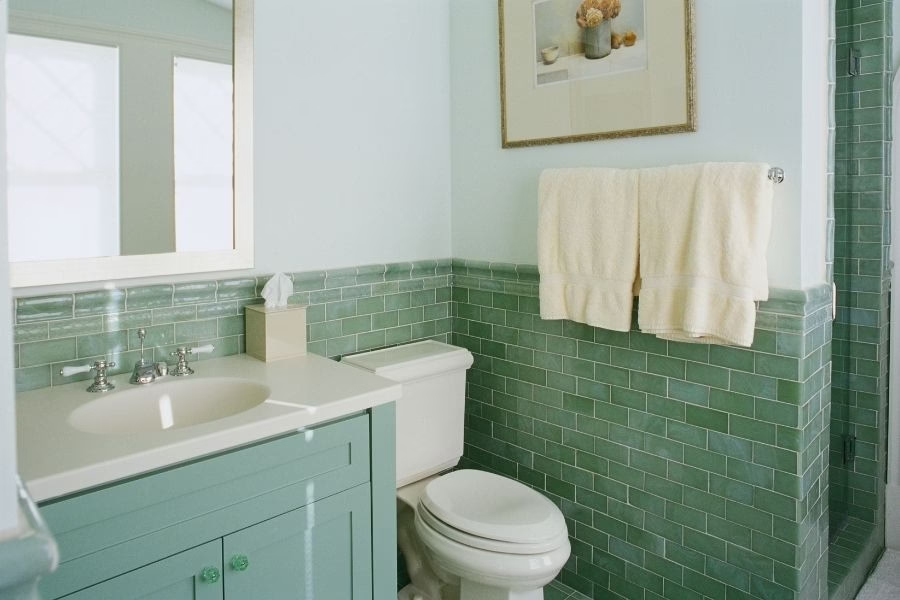
Bathrooms without working exhaust fans are one of the most common spots we find summer mold.
The 60% Rule
Indoor humidity above 60% is the threshold most mold needs to colonize. Keeping your home between 30% and 50% is one of the simplest defenses. A cheap hygrometer from a hardware store will tell you where you stand.
Suspect Mold in Your Round Rock Home?
Our IICRC-certified team handles testing, remediation, and rebuild under one roof. The longer mold sits, the worse it spreads.
Where Mold Loves to Hide in Round Rock Homes
Most summer mold isn’t growing where you can see it. It’s tucked into spaces that stay damp, dark, and forgotten. These are the usual suspects we run into during inspections across the Round Rock metro.
AC Units and HVAC Closets
Your AC works overtime in Round Rock summers, which means a lot of condensation. Clogged drain pans, sweating air handlers, and dirty evaporator coils are mold’s favorite vacation spots. If you smell something off when the AC kicks on, investigate before it spreads through your duct runs.
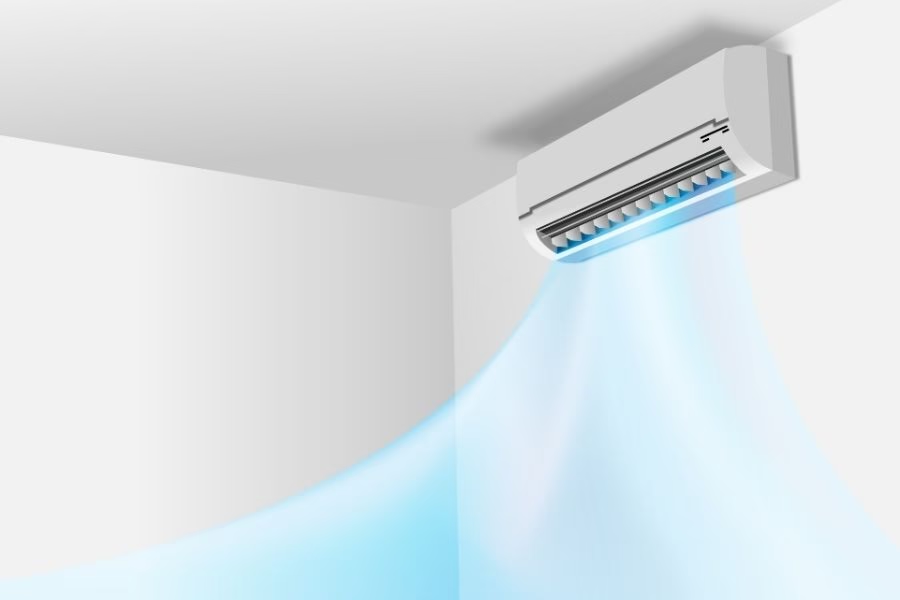
Clogged HVAC drain lines are a common summer mold trigger in Round Rock homes.
Crawl Spaces and Slab Edges
Crawl spaces collect moisture from clay soil saturation, plumbing leaks, and humid air seeping in through vents. Even on a slab foundation, water can wick under flooring and feed mold in subfloor seams. The EPA’s guide to home moisture problems covers why ventilation and vapor barriers matter so much.
Bathrooms, Laundry Rooms, and Kitchens
Anywhere water flows regularly, mold can take hold. Bathroom ceilings, the back of laundry walls, and the cabinet under your kitchen sink are common finds. A slow drip you’ve been meaning to fix can become a real problem fast. We’ve broken down how even a single water leak can lead to mold in a previous post worth bookmarking.
Attics
Round Rock attics regularly hit 130 degrees or more in summer. Add moisture from poor ventilation, roof leaks, or an HVAC unit up there, and mold can colonize roof decking and insulation before you ever notice.
Your Summer Mold Prevention Checklist
Most summer mold is preventable if you stay ahead of moisture. Here’s a quick checklist for Round Rock homeowners.
- Keep indoor humidity between 30% and 50%, with a dehumidifier if needed
- Schedule annual AC service, including coil cleaning and drain line flushing
- Run bathroom exhaust fans during and for 20 minutes after every shower
- Check under sinks, behind toilets, and around the water heater for slow leaks
- Clear gutters and push downspouts away from your slab
- Inspect attic insulation and roof decking for stains or sagging annually
- Address soft spots, peeling paint, or musty smells quickly
Quick Humidity Reference Table
| Indoor Humidity | What It Means |
|---|---|
| 30% to 50% | Ideal range. Comfortable, mold-resistant. |
| 50% to 60% | Caution zone. Monitor closely and ventilate. |
| 60% to 70% | Mold-friendly. Action needed within days. |
| Over 70% | High risk. Mold growth likely active somewhere. |
When DIY Stops and Professional Remediation Starts
Small surface mold on a bathroom caulk line? You can usually handle that with careful cleaning and better ventilation. Anything bigger than a square foot, anything tied to recent water damage cleanup, or anything inside walls, attics, or HVAC systems is professional territory.
Our team at Austin Fire & Flood holds IICRC certifications in mold remediation, water damage restoration, and fire damage restoration. Mold often hides behind a bigger water problem, and treating only what you see usually means it comes back. If you’ve recently had a leak, learn what to do immediately after water damage to head off mold early.
We work across the Austin metro with a heavy footprint in Round Rock and surrounding neighborhoods. Inspection, testing, remediation, and rebuild all happen under one roof, which means fewer subcontractors and a single point of contact.
FAQs
Can summer humidity alone cause mold without a leak?
Yes. When indoor humidity sits above 60% for several days, condensation forms on cool surfaces like ductwork, drywall behind vents, and cold-water pipes. That’s enough moisture for mold to start, even without a visible leak.
How fast does mold grow in Round Rock during summer?
Mold can begin colonizing within 24 to 48 hours under the right conditions. Round Rock’s warm temperatures and high humidity make that window the shortest of the year.
Does running my AC harder help prevent mold?
Running your AC helps because it pulls humidity out of the air, but only if the system is clean and well maintained. A neglected AC can actually become a mold source rather than a defense.
Is mold in a Round Rock attic dangerous?
Attic mold can affect indoor air quality if it spreads to insulation or migrates into living spaces through unsealed access points. It also damages roof decking over time.