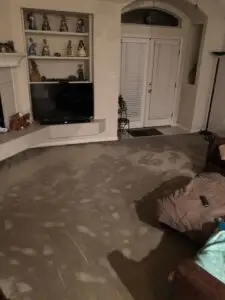
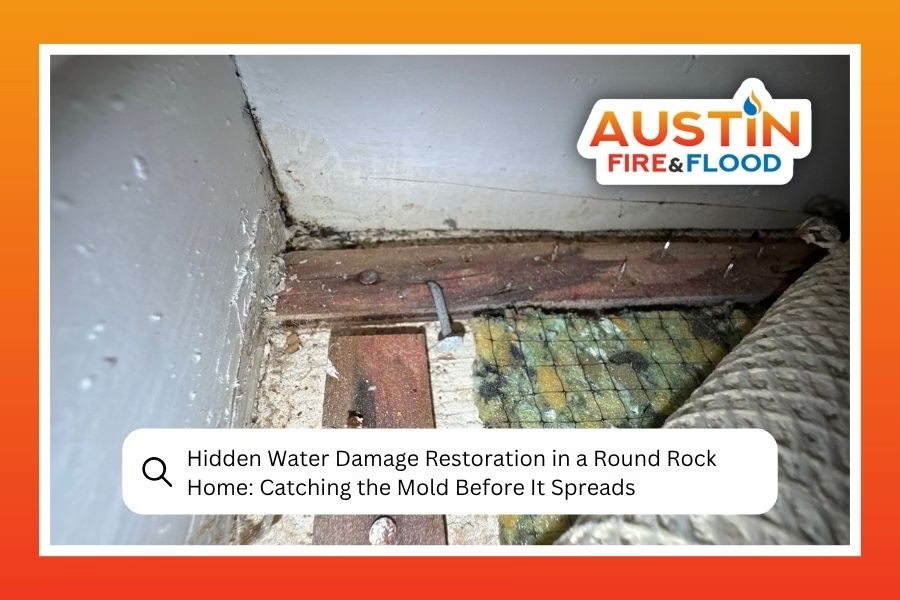
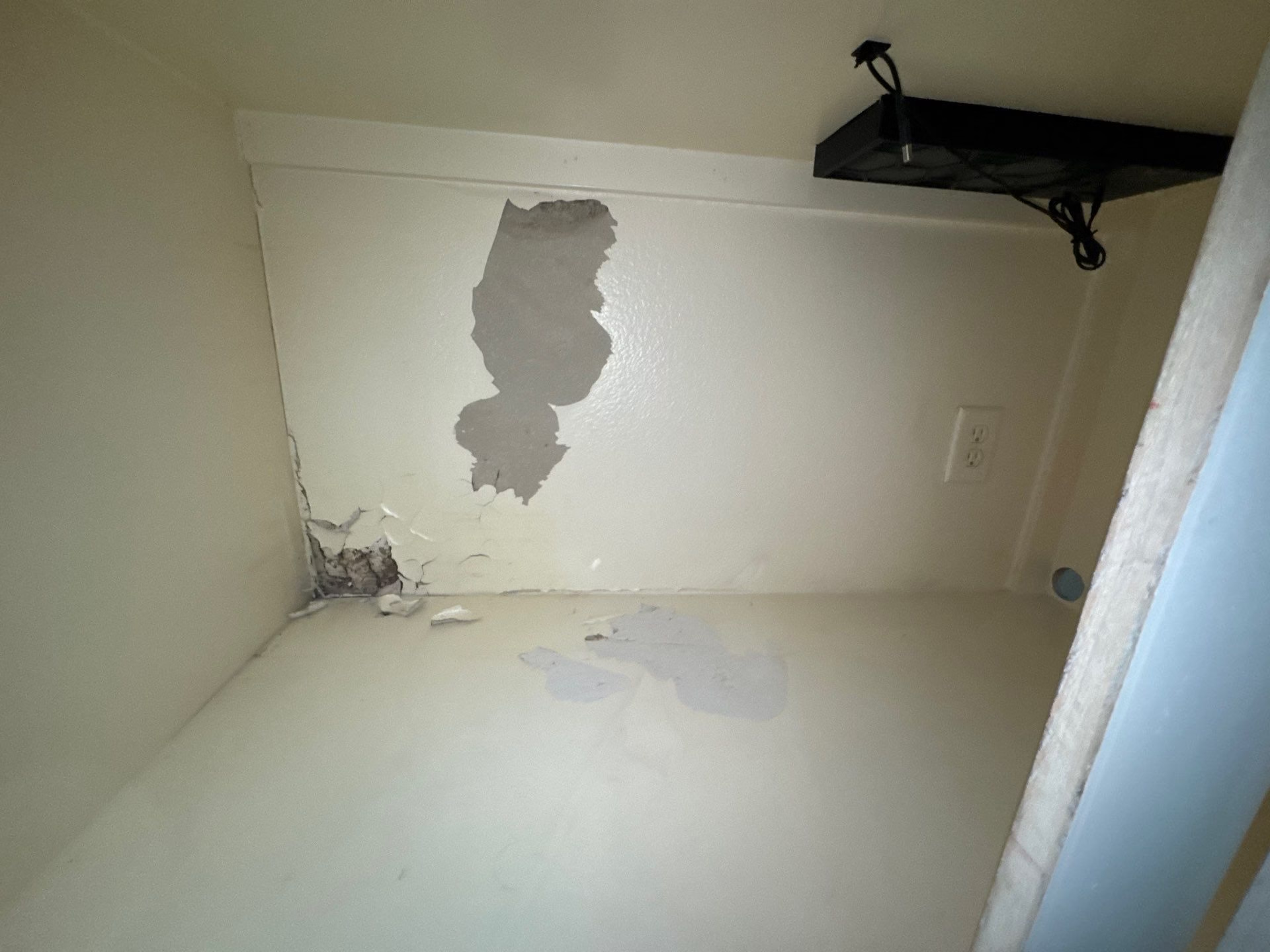
When we got the call for water damage restoration at a home in Round Rock, TX, the photos told a story we’ve seen plenty of times. Blistering paint. Crumbling drywall in the corners. Brown stains creeping down the walls. By the time water damage shows up on the surface, it’s usually been working behind the scenes for a while.
Our team at Austin Fire & Flood treats every job like it could be hiding something. In this case, it was. What looked like a wall problem turned out to be a moisture trail running down to mold growing under the carpet.
What the Homeowner Was Dealing With
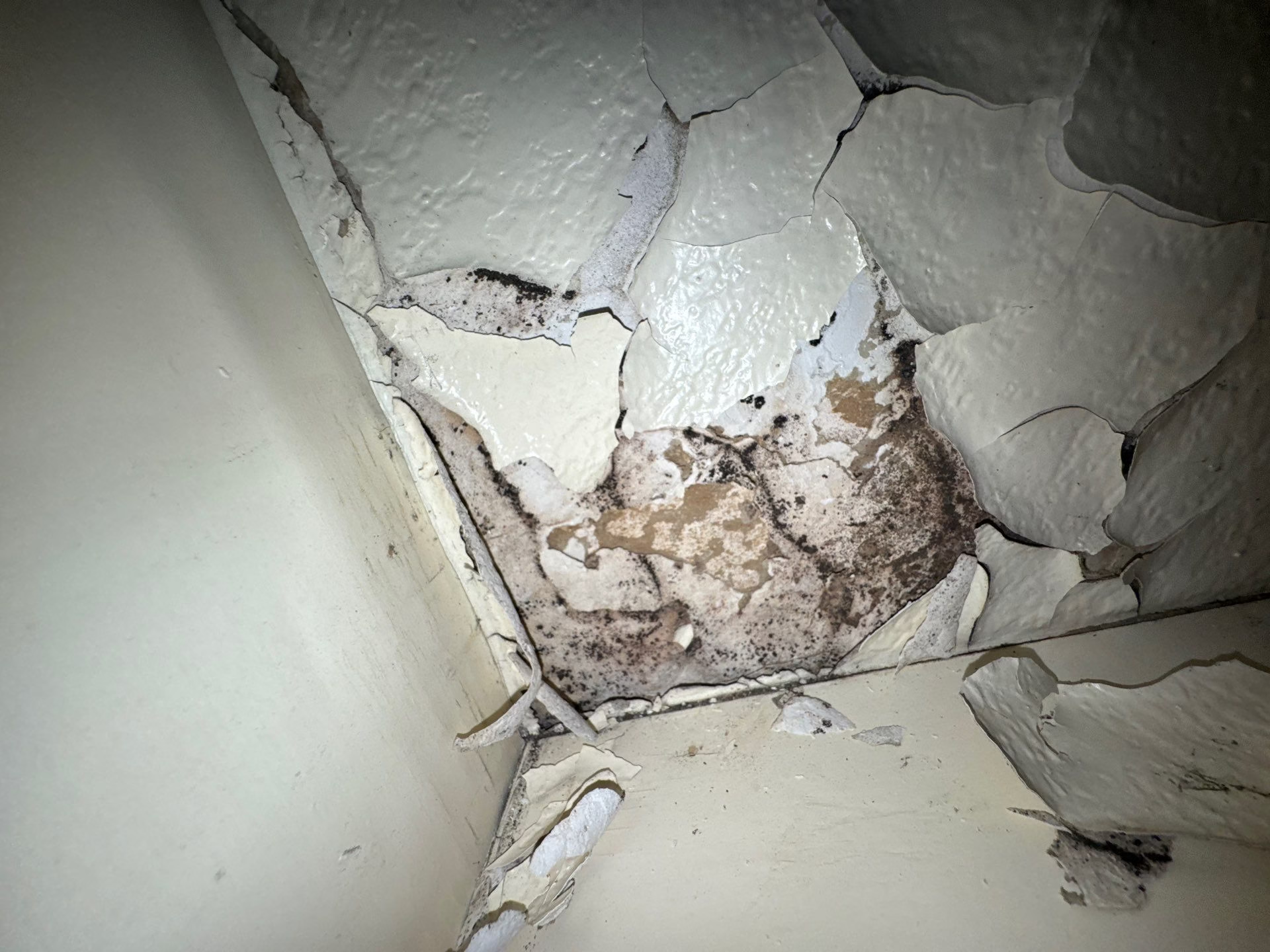
The damage was concentrated high on the walls and ceiling, then trailed downward. To us, that pattern is a giant arrow. Water moving top to bottom almost always means the source is above or behind the wall, not a spill on the floor.
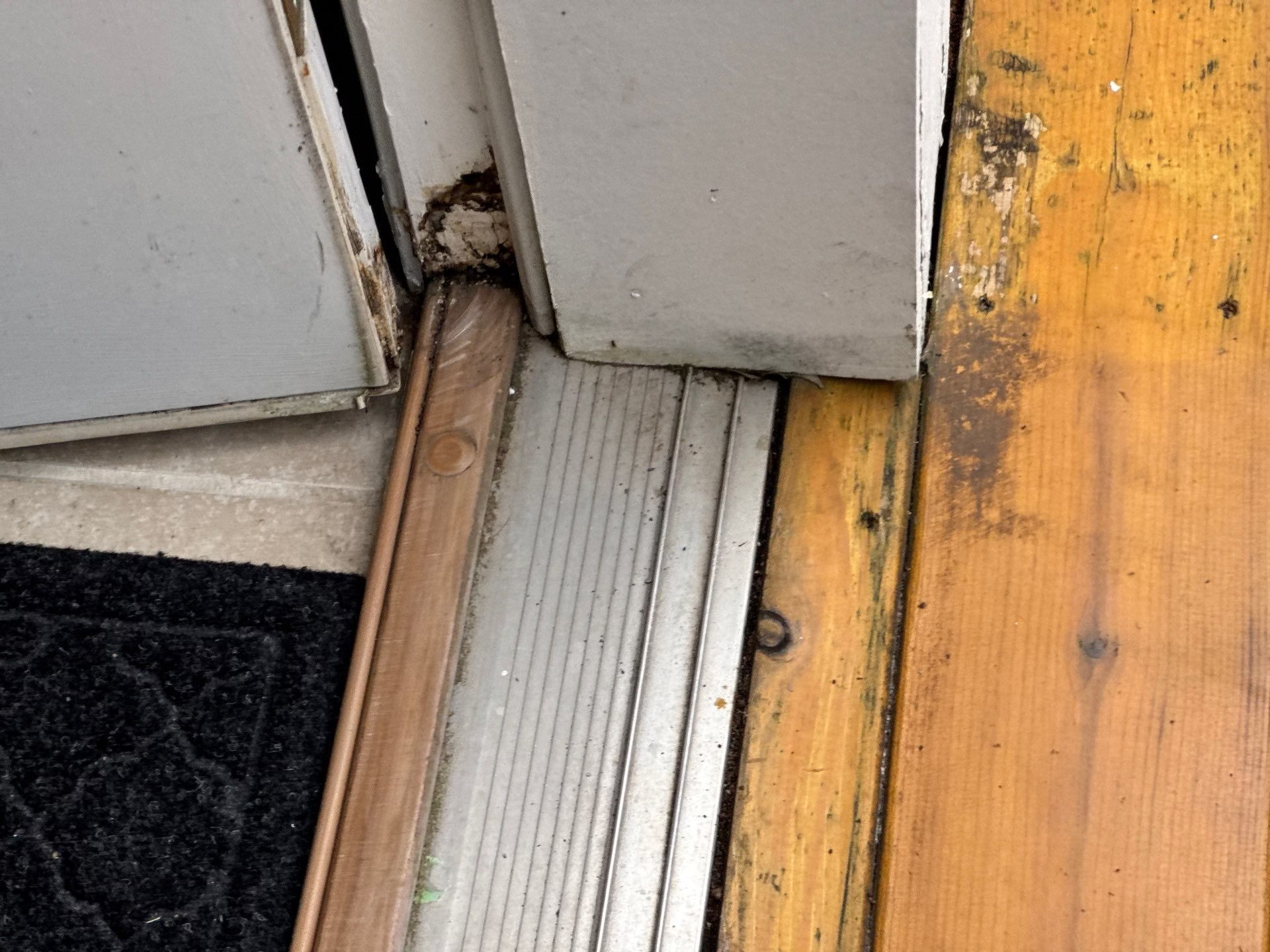
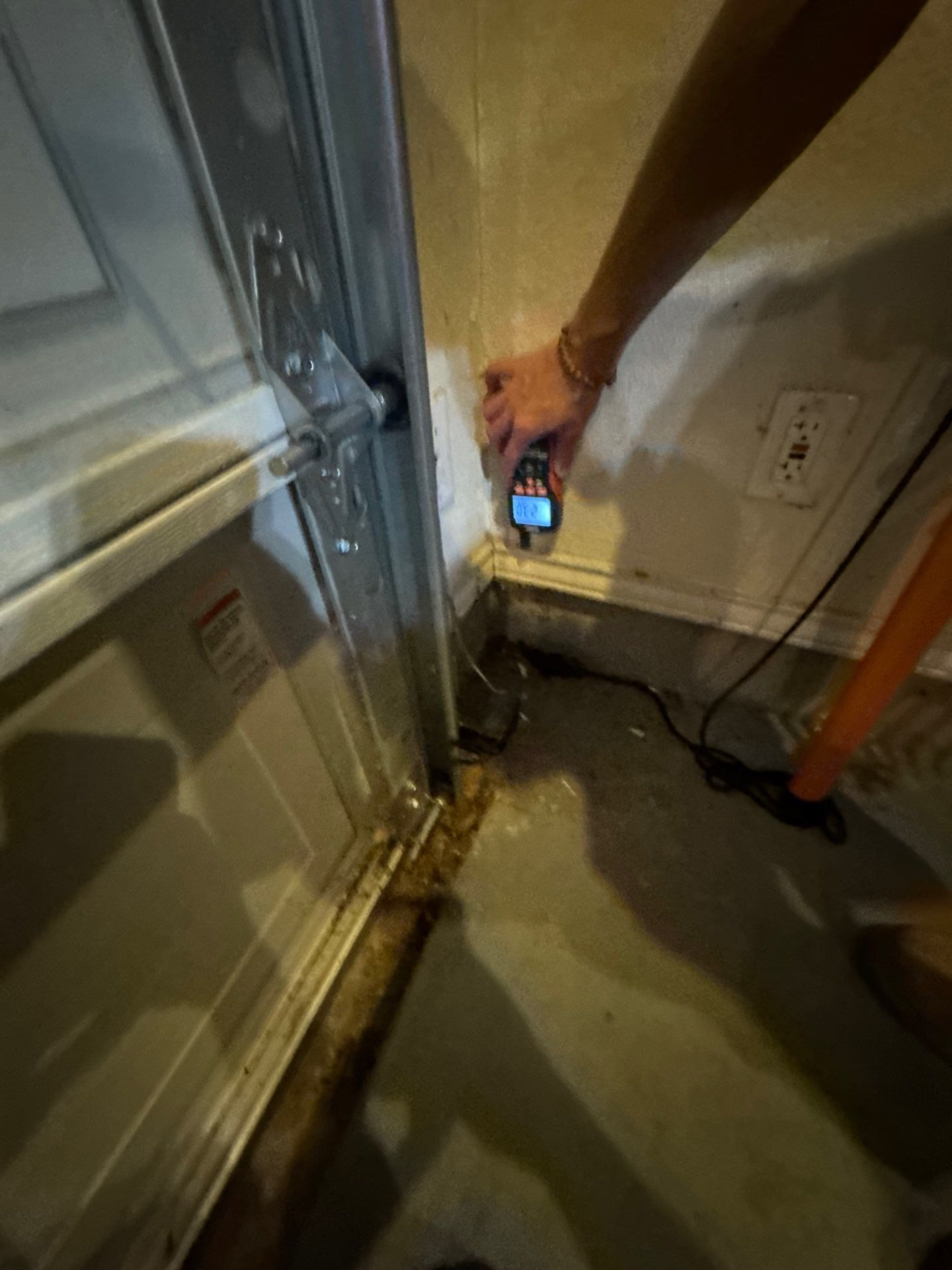
The affected zone centered on a closet and the wall, ceiling, and carpet right next to it. A nearby exterior door threshold had also taken on water and started to rot. None of this is unusual here. Round Rock homes sit on slab foundations, so when water gets in up high, gravity pulls it down through the structure with nowhere good to go.
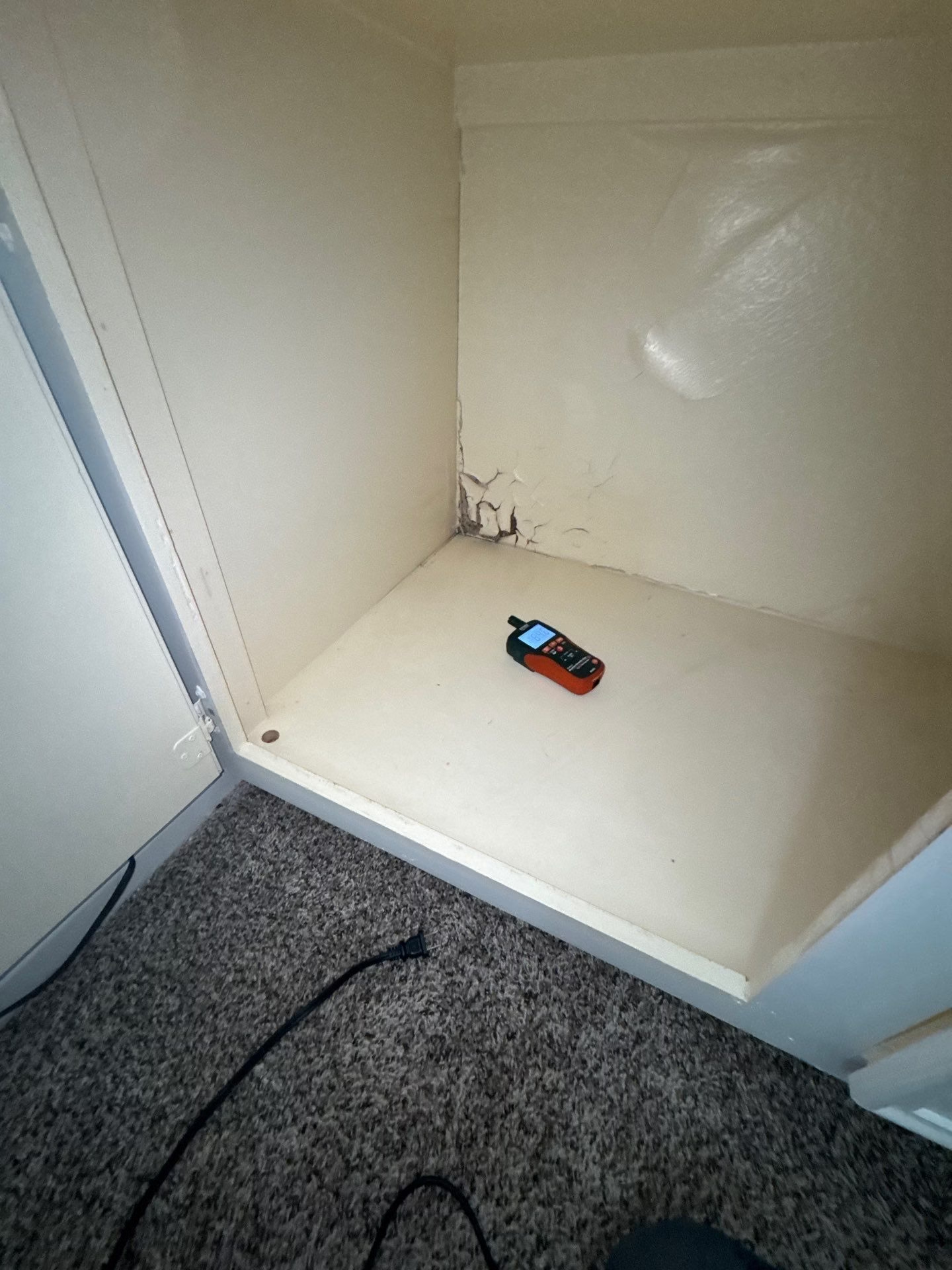
Before: peeling paint, crumbling drywall, and elevated moisture readings.
|
|
|
How We Found the Full Extent of the Damage
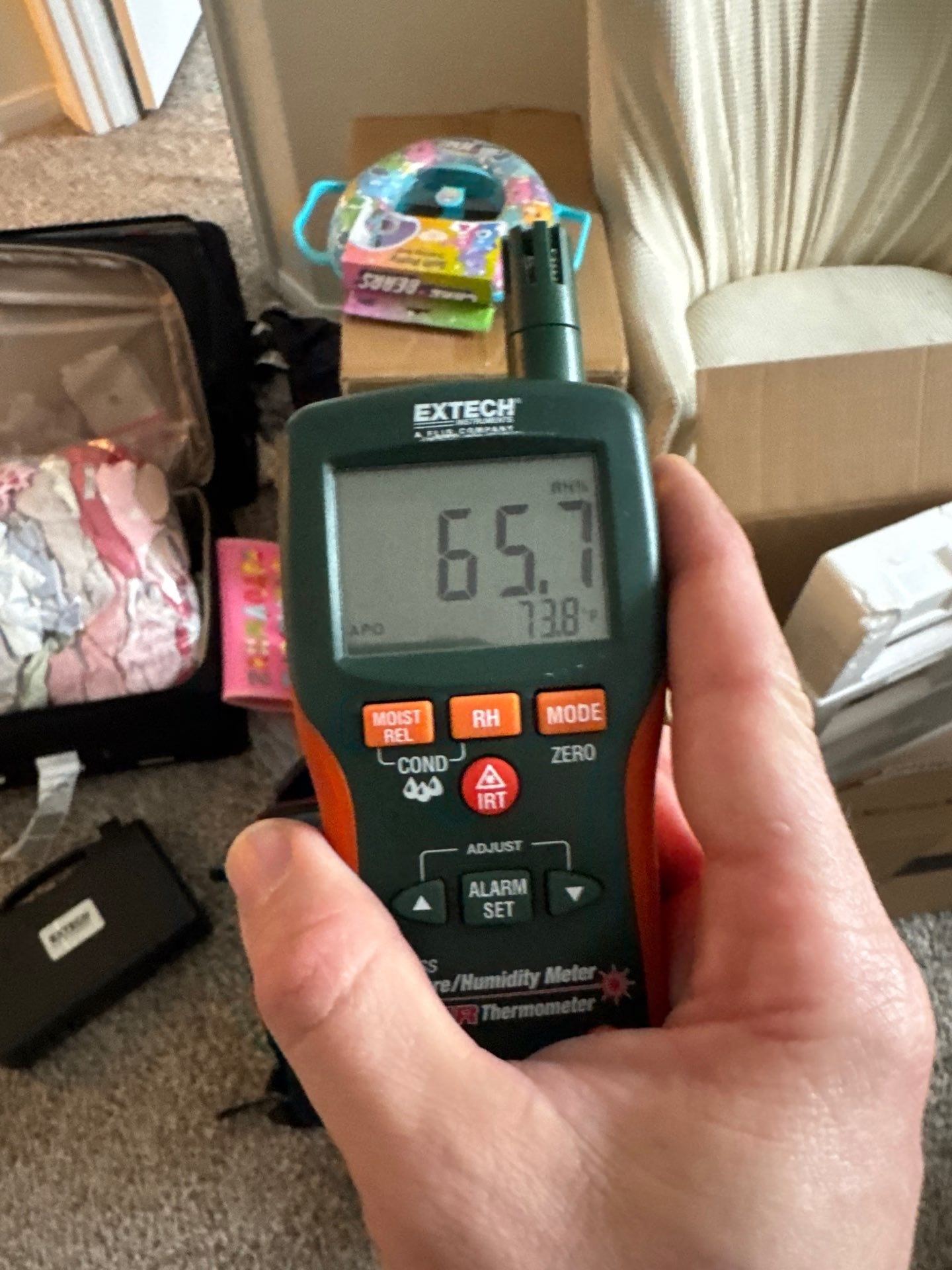
Surface damage only tells you where to start looking. The real work is finding the water you can’t see. Our technicians used calibrated moisture meters to map the intrusion, reading inside the walls and under the flooring where the eye can’t reach.
The meters confirmed what the staining hinted at. Moisture was elevated well beyond the visible damage, hidden in the wall cavities and trapped beneath the carpet. The IICRC S500 water damage standard calls for mapping the entire affected area before any drying begins, and that step is exactly why we caught what came next.
The Mold Under the Carpet
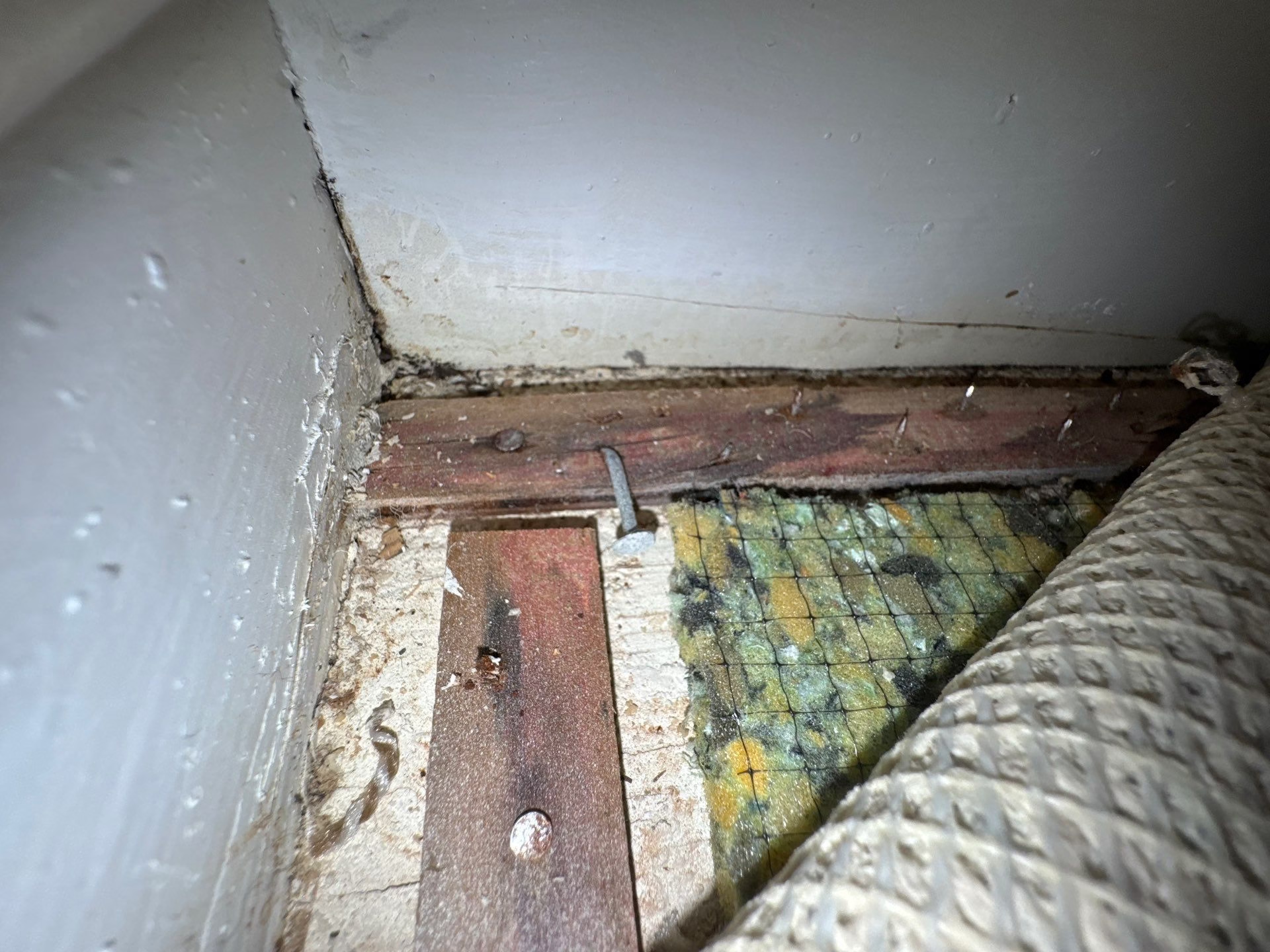
When we lifted the carpet, we found saturated padding and a subfloor with active mold growth. Given how long the moisture had been sitting, not a huge surprise, but never something you want to see. In Austin’s warm, humid climate, mold can take hold on a wet surface in as little as 24 to 48 hours. The EPA’s guidance on mold and moisture says it plainly: control the water, and you control the mold.
During: pulling carpet, exposing the slab, and checking moisture at the doorway during tear-out.
|
|
|
The Tear-Out, Treatment, and Drying Process
Once we knew the full picture, the plan was straightforward. Remove what was compromised, treat what stayed, and dry everything down to normal levels. Skipping any of those steps just invites the problem back.
Here’s how our crew worked through it:
- Controlled tear-out. We removed the soaked carpet, padding, and the drywall that was too far gone to save, keeping dust and contamination contained as we went.
- Cleaning and antimicrobial treatment. Every exposed surface got cleaned and treated to stop the mold from coming back.
- Commercial drying. We set air movers and dehumidifiers and monitored the readings until the structure hit normal moisture levels.
Because we handle professional mold remediation in-house alongside water work, the homeowner didn’t have to juggle two different companies. One team, one plan, start to finish.
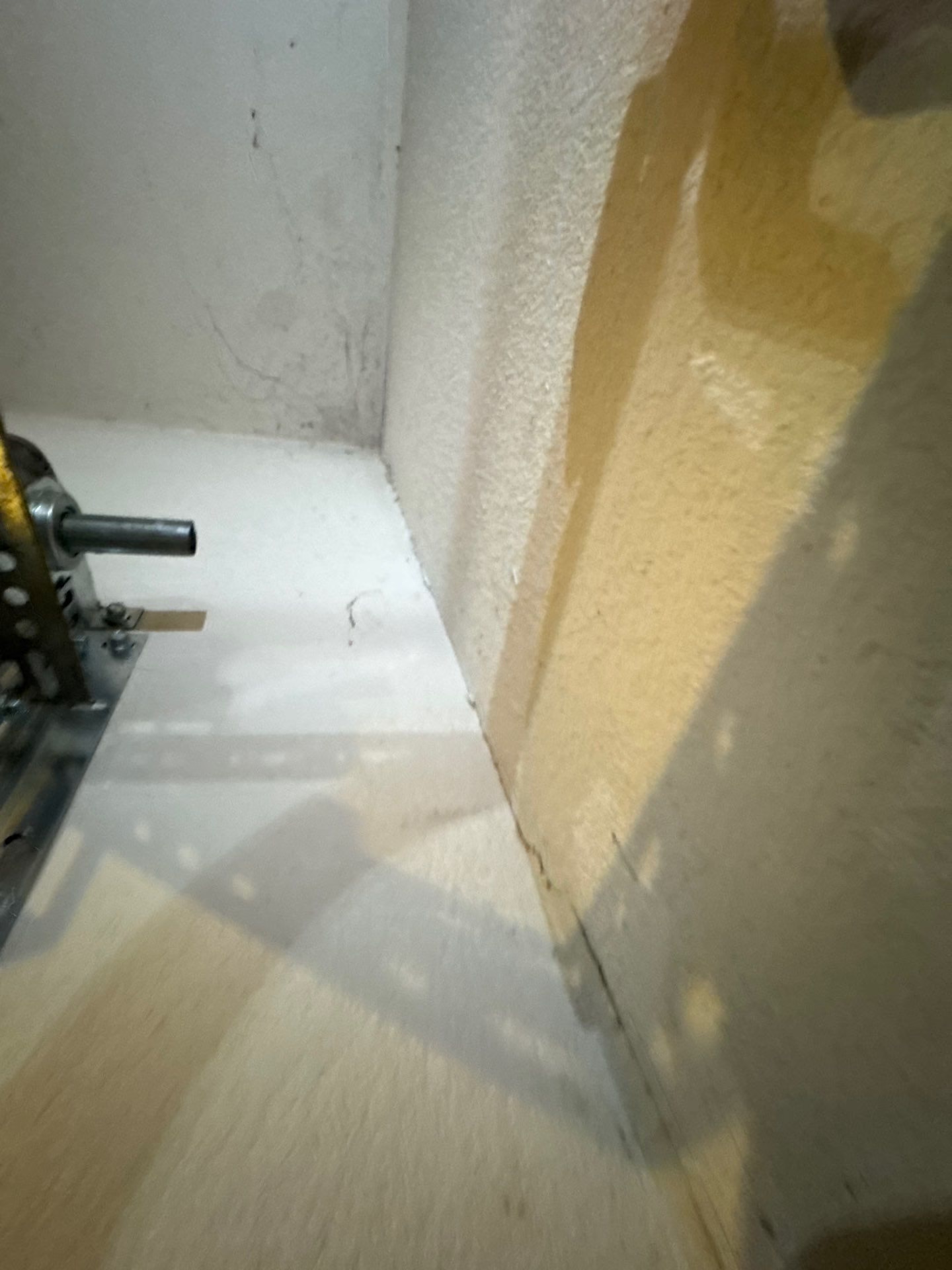
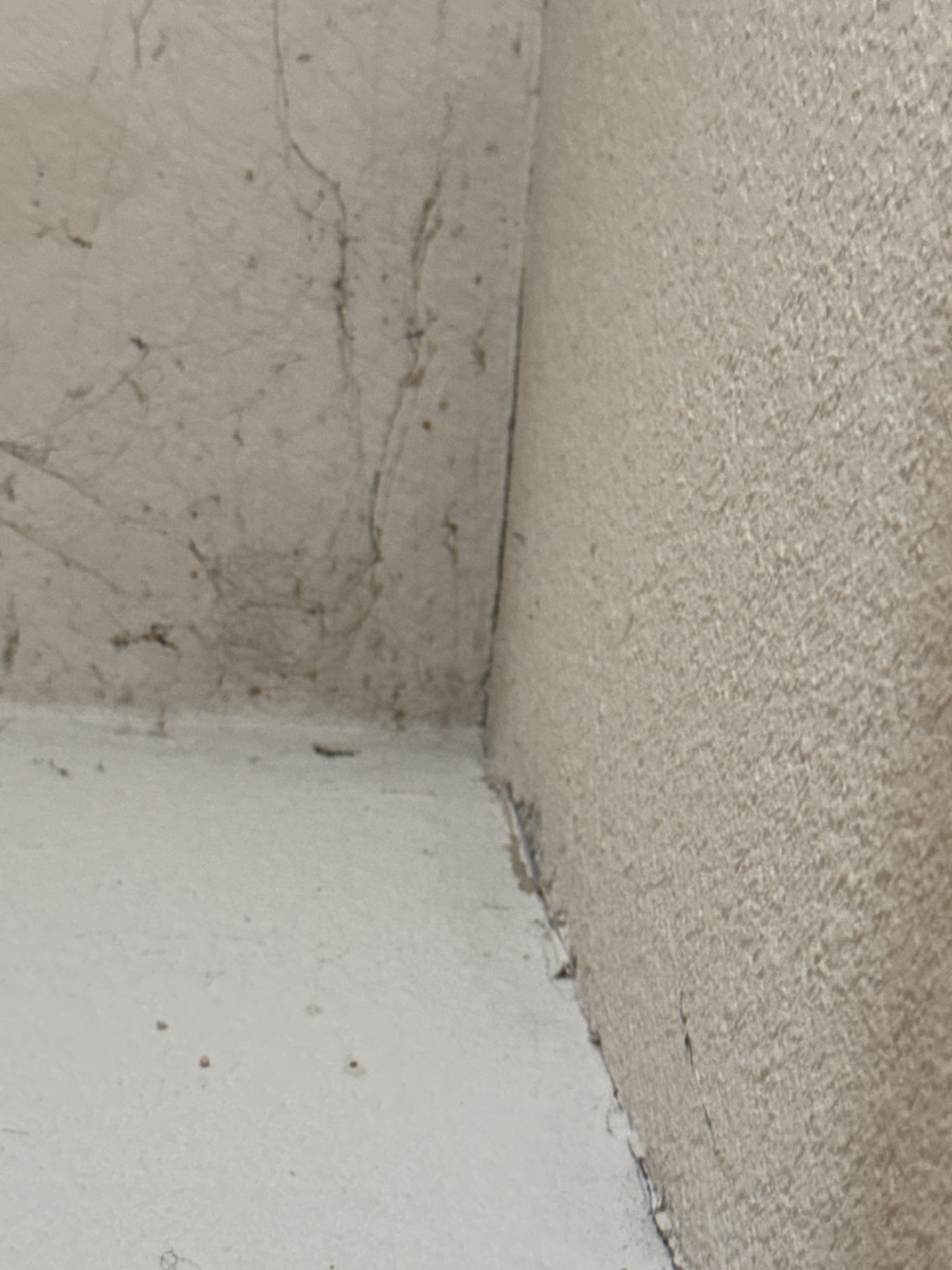
After: a fully torn-out, treated, and dried space with the drywall base cleaned and ready for rebuild.
|
|
|
The Result: A Clean, Stable Space Ready to Rebuild
By the time we wrapped up, the area was dry, clean, and structurally sound. Moisture levels were back to normal, the mold was gone, and the space was stabilized and prepped for reconstruction. Since we also offer full home rebuild and remodel services, the homeowner could take it straight from bare slab back to finished room without ever changing crews.
That’s the part we’re proudest of. They called us worried about some stained walls and got the hidden mold handled too, before it had a chance to spread further.
Seeing Water Stains or Smelling Something Musty?
Don’t wait for it to get worse. Hidden moisture spreads fast in Austin’s climate, and what looks like a small wall stain can mean mold growing where you can’t see it. Our IICRC certified team responds 24/7, every day of the year, and we handle the insurance paperwork too.
Want to see more of what our crew handles around the Austin area? Take a look at our recent restoration projects, browse practical tips in our water damage knowledge base, or read what local homeowners say in our customer testimonials.
Frequently Asked Questions
How do you know if water damage is hiding behind a wall?
Surface signs like brown stains, peeling paint, or a musty smell often mean moisture is trapped behind the wall. We use calibrated moisture meters to read inside wall cavities and under flooring, so we can map damage you can’t see with the naked eye.
Why does water damage so often lead to mold in Austin?
Austin summers are hot and humid, which is ideal for mold. Mold can begin growing on a wet surface in as little as 24 to 48 hours, so any standing moisture left untreated is a real risk. Catching and drying the water quickly is the best prevention.
Do you handle both the water cleanup and the rebuild?
Yes. We do mitigation, mold remediation, and full reconstruction in-house, so you work with one team from the first inspection to the finished room. That means no subcontractor handoffs and no gaps in the timeline.
Does Austin Fire & Flood serve Round Rock?
Absolutely. Round Rock is part of our regular service area, and we respond to water damage emergencies there around the clock, 365 days a year. We also handle the insurance claim directly to make the process easier on you.