
Soot removal is the careful work of lifting fire residue off walls, ceilings, and belongings without grinding it deeper, then neutralizing the smoke odor trapped in everything porous. It matters because soot is acidic and often oily, so the longer it sits, the more it stains, etches, and corrodes. At Austin Fire & Flood, our IICRC-certified technicians match every cleaning method to the residue your fire left behind.









What burned decides what we’re cleaning, and the wrong method can make it worse:
Fast, hot fires that burn wood and paper leave a fine black dust. Wipe it with a wet rag and it smears into a gray streak.
Slow, smoldering fires that burn plastics and rubber leave a sticky, strong-smelling film that clings to everything.
Burned food leaves a nearly invisible yellowish film with a powerful odor, which is why it's so common in our kitchen fire damage cleanup work.
A smoldering appliance or a burned pot can leave a house smelling like a campfire with almost nothing to see.
Smoke damage isn’t a fixed amount. It grows. Within the first few hours, acidic residue can start yellowing plastics and dulling appliance finishes. Within a few days, painted walls and grout can stain for good, and metal fixtures begin to tarnish. After a few weeks, a cleaning job can turn into refinishing or replacement, and the odor works its way into framing and insulation.
Austin weather adds a twist. Smoke odor trapped in porous materials releases again when heat and humidity climb, so a smell that seemed gone in January can come back strong in July. The IICRC S700 smoke damage standard treats odor management as its own part of the job, separate from surface cleaning. For a closer look, here’s how smoke odor removal works from start to finish.
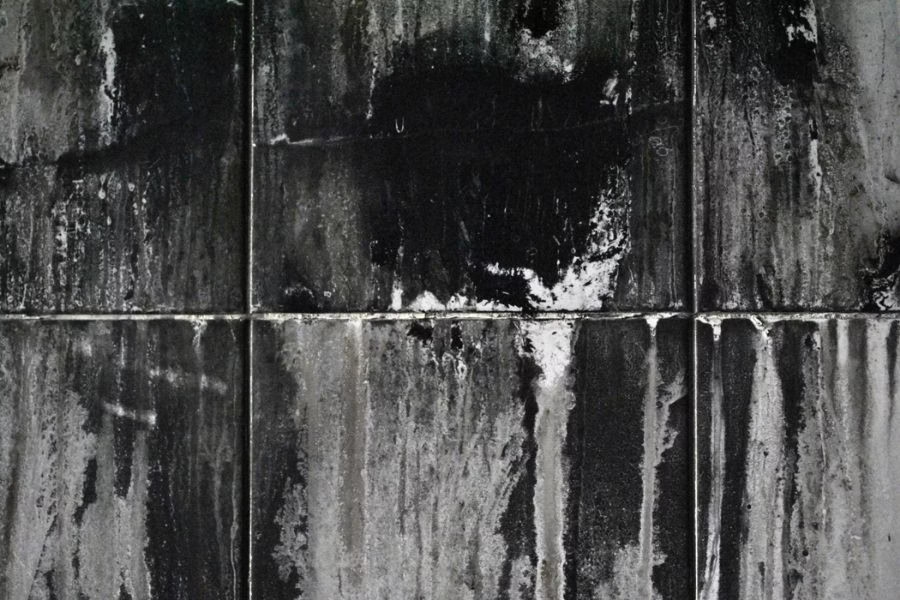
Every soot damage restoration job starts with walking the property and testing surfaces to identify which residues we’re dealing with and how far they spread. Smoke travels with airflow, so we check closets, cabinet interiors, attics, and the rooms farthest from the fire. If smoke moved through your HVAC system, we’ll flag it.
Cleaning goes from dry to wet. Loose soot gets lifted with vacuums and dry-cleaning sponges before any liquid touches a surface, then cleaners matched to the residue handle what’s left. Belongings get cleaned too, either on-site or packed out for off-site cleaning. Professional smoke deodorization comes last, using treatments that break down odor molecules instead of covering them up. When soot cleanup services are one piece of a bigger job, they roll into our full fire damage restoration work, and you can read why soot removal is essential after any fire.
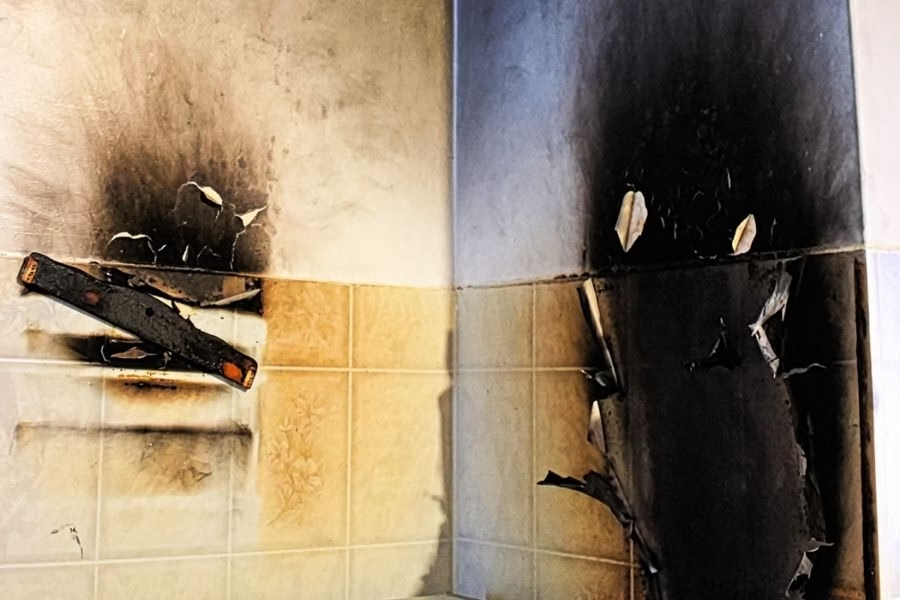
For single-family homes, smoke damage restoration in Austin is about getting your rooms livable again. In apartments, duplexes, and offices, smoke from one unit often drifts into the next through shared walls and attic space, so property managers get unit-by-unit documentation and a cleaning schedule that keeps unaffected spaces open.
We provide soot removal and smoke odor removal across Austin, Jollyville, Cedar Park, Round Rock, Pflugerville, Leander, and Wildhorse Creek.
Imagine opening your front door and smelling nothing at all. Clean walls, clear air, and belongings that feel like yours again. That’s where we’re headed together. Reach out to our smoke damage cleaning company in Austin, TX, and we’ll start with an honest look at what the smoke left behind.
This site uses cookies and tracking technologies including Google Tag Manager, Google Maps, and YouTube. You can accept, reject non-essential tracking, or manage your preferences.