Jump To:
If you’ve ever had water damage in your home, you probably assumed all water is the same. It’s not. The water that backs up from a sewer line is a completely different problem than a leaking fridge, and it requires a completely different approach to emergency water damage restoration. At Austin Fire & Flood, our IICRC-certified technicians handle every category of water loss, and category 3 demands the most caution, expertise, and speed.
So what exactly is category 3 water damage, and why does it need special handling?
Understanding the Three Water Damage Categories
The restoration industry classifies water damage into three categories based on contamination level. These aren’t random labels. They come from the IICRC S500 Standard for Water Damage Restoration, which is the benchmark every certified restoration company follows.
Here’s the quick breakdown:
| Category | Water Source | Contamination Level | Example |
|---|---|---|---|
| Category 1 | Clean water | No significant health risk | Broken supply line, leaking faucet |
| Category 2 | Gray water | May cause illness if ingested | Washing machine overflow, dishwasher leak |
| Category 3 | Black water | Highly contaminated, serious health threat | Sewage backup, floodwater, toilet overflow with feces |
One thing most homeowners don’t realize? Category 1 water can become category 3 if it sits long enough. Standing water that goes untreated for more than 48 hours starts breeding bacteria and microorganisms, which upgrades the contamination level automatically. Time matters.
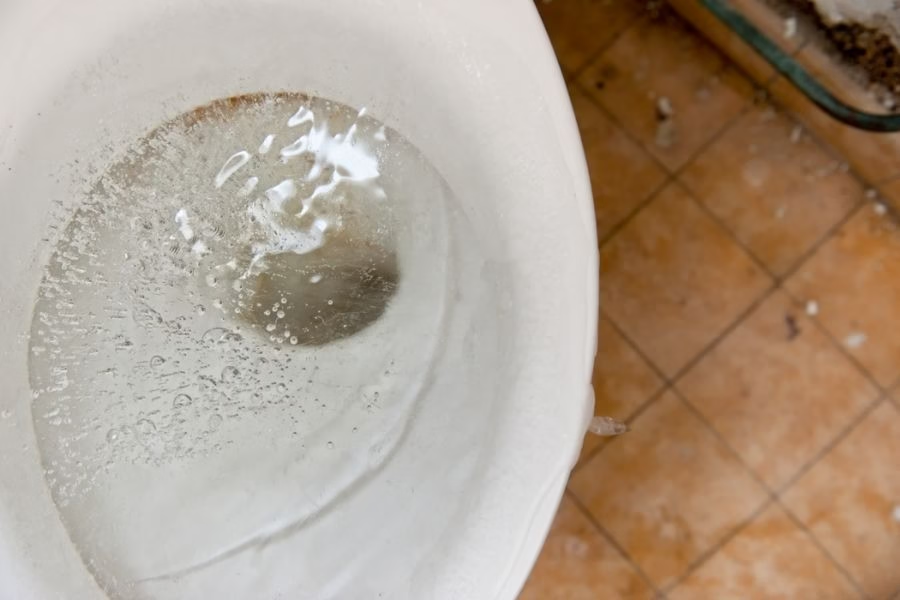
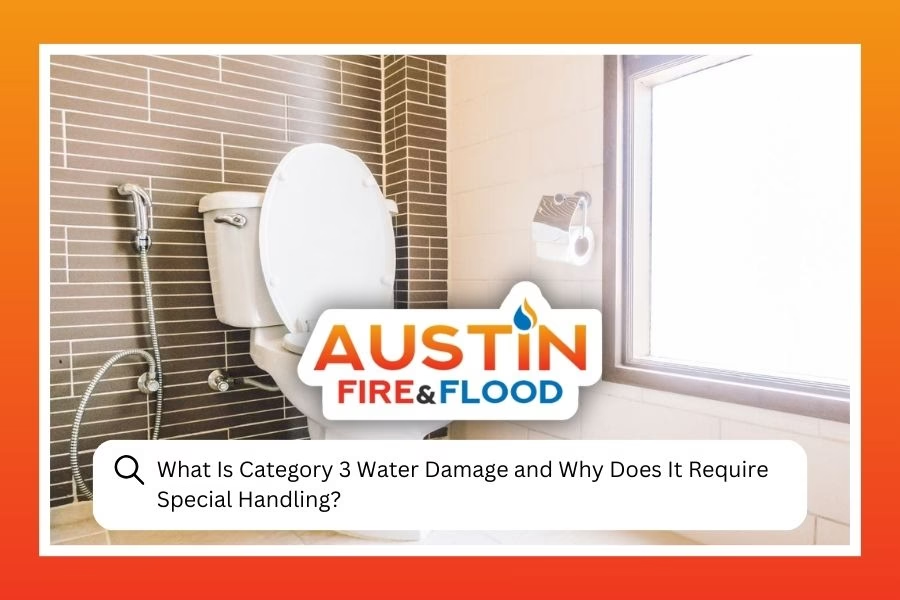
Toilet overflows involving sewage are one of the most common category 3 water losses we respond to in Austin.
What Makes Category 3 Water So Dangerous?
Category 3 water, often called “black water,” contains bacteria, viruses, fungi, and other pathogens that can cause serious illness. We’re talking about raw sewage, floodwater that’s picked up contaminants, and water mixed with biological waste. It’s more common than most people think.
The CDC warns that contact with contaminated floodwater can lead to gastrointestinal illness, skin infections, and respiratory issues, especially for children, the elderly, and anyone with a compromised immune system. This is why category 3 requires specialized safety protocols beyond setting up a few fans.
Dealing with a sewage backup or contaminated water in your home?
Our team responds 24/7 with the equipment and training to handle category 3 water losses safely.
Common Sources of Category 3 Water in Austin Homes
In the Austin area, we see category 3 water damage from a handful of common sources. Some are obvious, others catch homeowners completely off guard.
- Sewage backups: When the main sewer line clogs or breaks, raw sewage can push back through drains, toilets, and floor drains.
- Septic system failures: In parts of the Austin metro where homes are on septic systems, a failed tank can cause sewage to surface inside the home.
- Toilet overflows with solid waste: A clogged toilet that overflows with fecal matter is a category 3 event, even though it might seem minor at first.
- Floodwater intrusion: Austin is one of the most flash flood-prone regions in North America. Stormwater carries soil, chemicals, and animal waste, making it category 3 by default.
- Standing water left untreated: Even clean water from a broken appliance becomes contaminated after sitting too long.
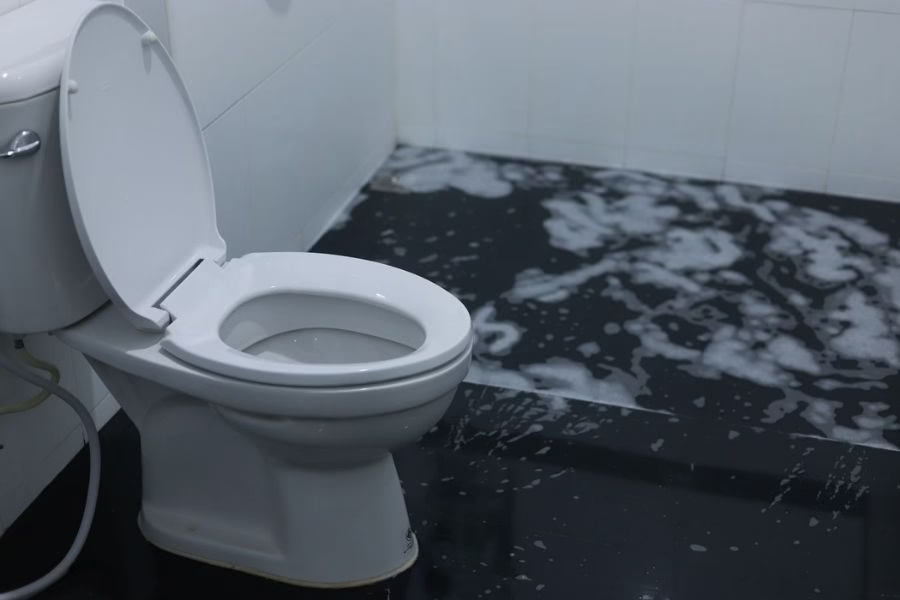
Category 3 cleanup requires full PPE and antimicrobial treatment, not just towels and a mop.
Health Risks and Why You Shouldn’t DIY This
We get it. The urge to grab towels and start cleaning is strong. But category 3 water damage is not a DIY project. Period.
Black water contains pathogens like E. coli, hepatitis, and other dangerous organisms. Without proper personal protective equipment, antimicrobial treatments, and commercial-grade extraction equipment, you’re exposing yourself and your family to real health hazards. The contamination soaks into porous materials like drywall, carpet, insulation, and wood subflooring, which often need to be removed entirely rather than dried in place.
⚠️ Important: What Category 3 Water Can Contain
Viruses (Hepatitis A)
Parasites (Giardia, Cryptosporidium)
Fungi and Mold Spores
Chemical Contaminants
Heavy Metals
Austin’s hot, humid climate accelerates mold growth after any water event. With category 3 water, the risk is even higher because the organic contaminants in black water are essentially a buffet for mold spores. If you suspect mold after a sewage backup or flood, professional mold remediation should happen as soon as possible.
How Professionals Handle Category 3 Cleanup
At Austin Fire & Flood, our team has over 30 years of combined experience handling category 3 water losses. These jobs aren’t glamorous, but they’re exactly the kind of work we’re built for. Here’s what the process looks like:
- Safety assessment and containment: We isolate the affected area to prevent cross-contamination throughout your home.
- Water extraction: Industrial pumps and truck-mounted extractors remove standing water fast.
- Removal of contaminated materials: Affected drywall, carpet, padding, insulation, and other porous materials are removed and disposed of properly.
- Antimicrobial treatment: Every surface gets treated with professional-grade antimicrobial agents to kill bacteria and prevent mold.
- Structural drying: Commercial dehumidifiers and air movers bring moisture levels back to normal, verified with moisture meters.
- Reconstruction: Because we handle both mitigation and rebuild in-house, we can restore your home from start to finish without subcontractors.
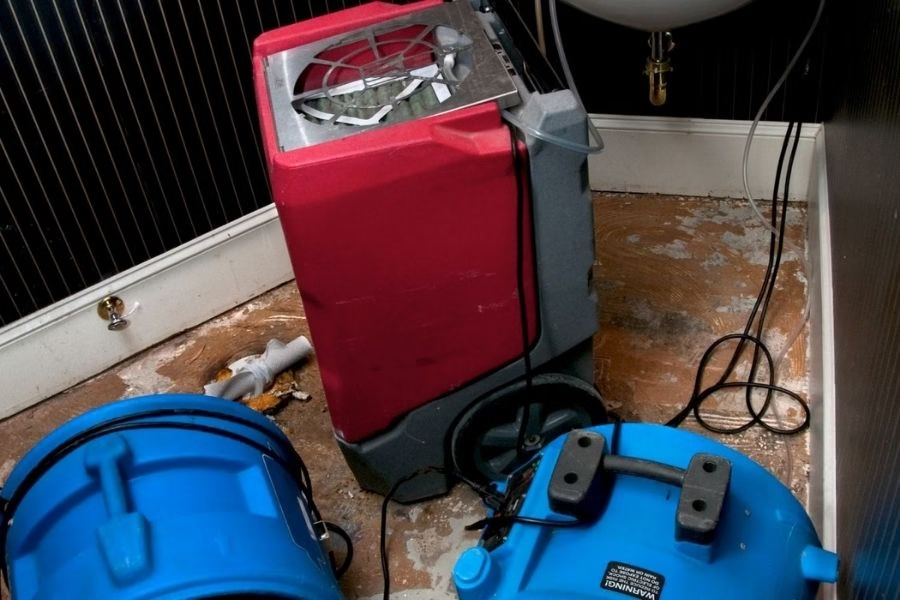
Commercial drying equipment is essential after cat 3 water removal to prevent mold and further structural damage.
Because we handle everything under one roof, from the emergency call to the final coat of paint, there are fewer delays and a faster path back to normal. You can learn more about what water restoration typically costs to know what to expect.
Don’t let contaminated water put your family’s health at risk.
Austin Fire & Flood is available 24/7, 365 days a year for category 3 water emergencies.
If you’re curious whether water damage could lead to mold, check out our post on whether a one-time water leak can cause mold.
Frequently Asked Questions About Category 3 Water Damage
Can I clean up category 3 water damage myself?
No. Category 3 water contains dangerous pathogens including bacteria, viruses, and parasites. Professional restoration companies use specialized PPE, antimicrobial treatments, and commercial extraction equipment that homeowners don’t have. Attempting a DIY cleanup puts your health at serious risk.
Does homeowners insurance cover category 3 water damage?
In most cases, yes, if the damage is sudden and accidental. However, flood damage from external sources typically requires a separate flood policy. Our team at Austin Fire & Flood works directly with insurance companies to help document and file claims, so you can focus on getting your home back to normal.
How quickly does category 3 water damage need to be addressed?
Immediately. Contaminated water begins causing secondary damage within hours, and mold can start growing within 24 to 48 hours, especially in Austin’s warm, humid climate. The longer you wait, the more extensive the damage becomes and the higher the restoration costs.
What’s the difference between gray water and black water?
Gray water (category 2) comes from sources like washing machines or dishwashers and may cause illness if ingested. Black water (category 3) contains raw sewage, fecal matter, or external floodwater with dangerous pathogens, requiring significantly more aggressive cleanup protocols.