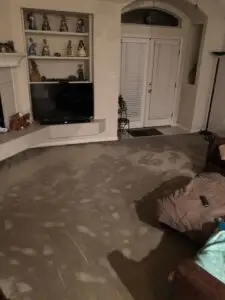

Some water damage announces itself with a bang. A burst pipe, a flooded kitchen, water pooling across the floor. But some of the worst damage we see at Austin Fire & Flood sneaks in quietly, hiding behind walls and under flooring for days before anyone notices. That’s exactly what happened with this emergency water damage restoration job in Georgetown, TX.
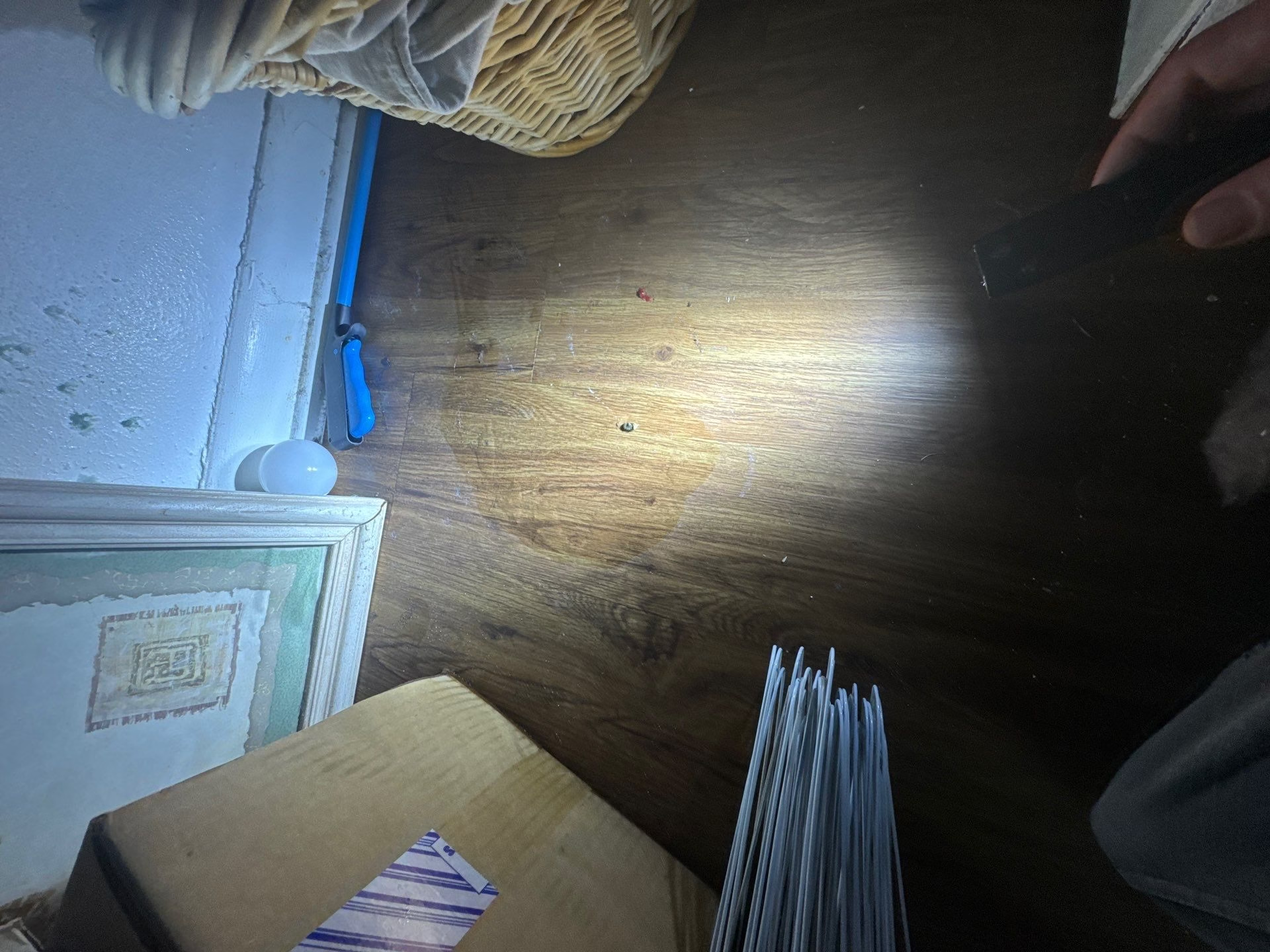
The homeowner called us after spotting a water stain spreading across the floor near a hallway. It didn’t look like much at first. But here’s the thing about water damage: what you can see is almost never the full picture.
Tracking Down the Source of the Leak
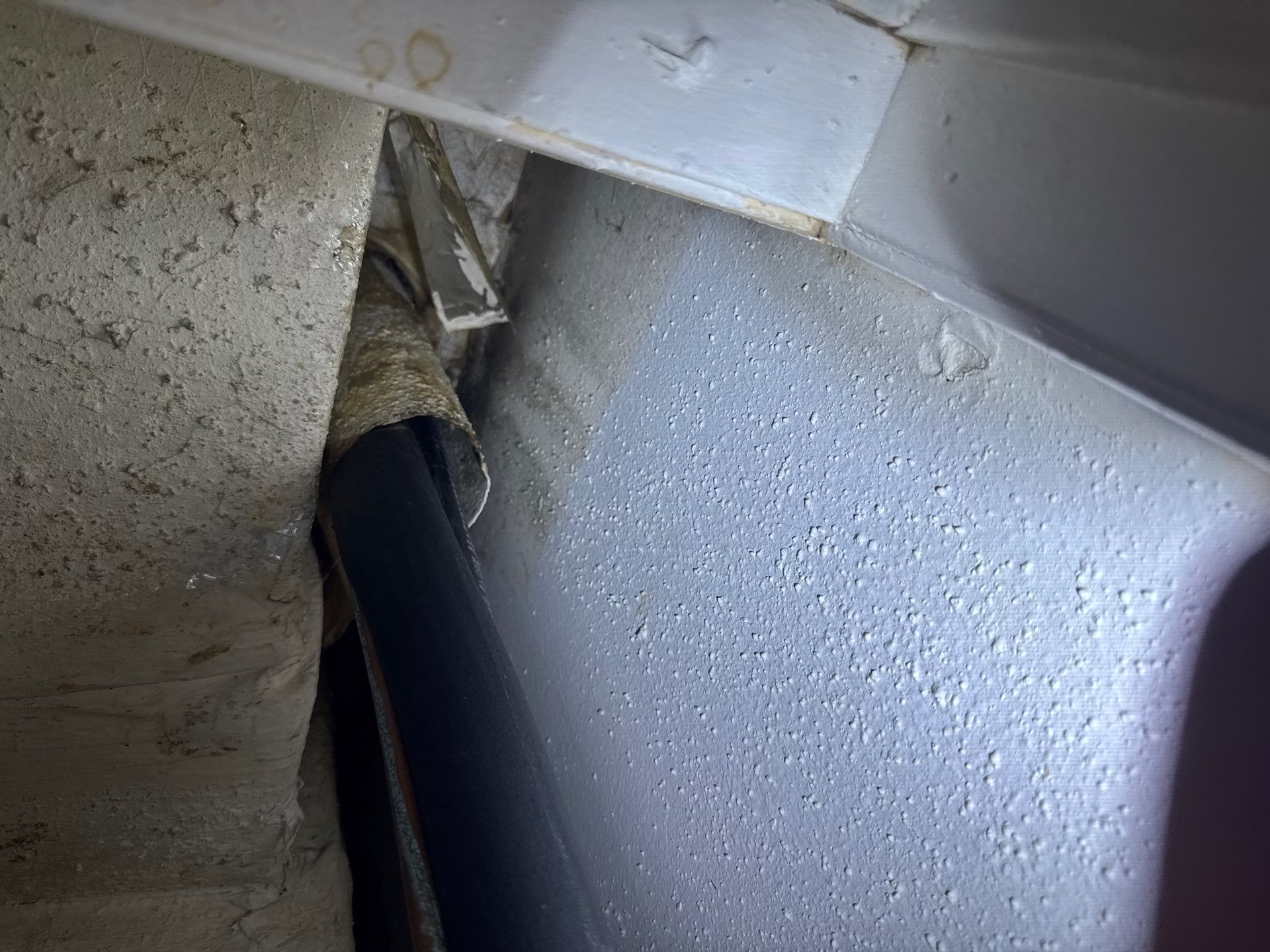
When our crew arrived, we started with a full inspection. The water stain on the floor told part of the story, but we needed to find where the moisture was actually coming from. We traced the damage back to the HVAC closet, where a drain line had failed at its penetration point through the wall.
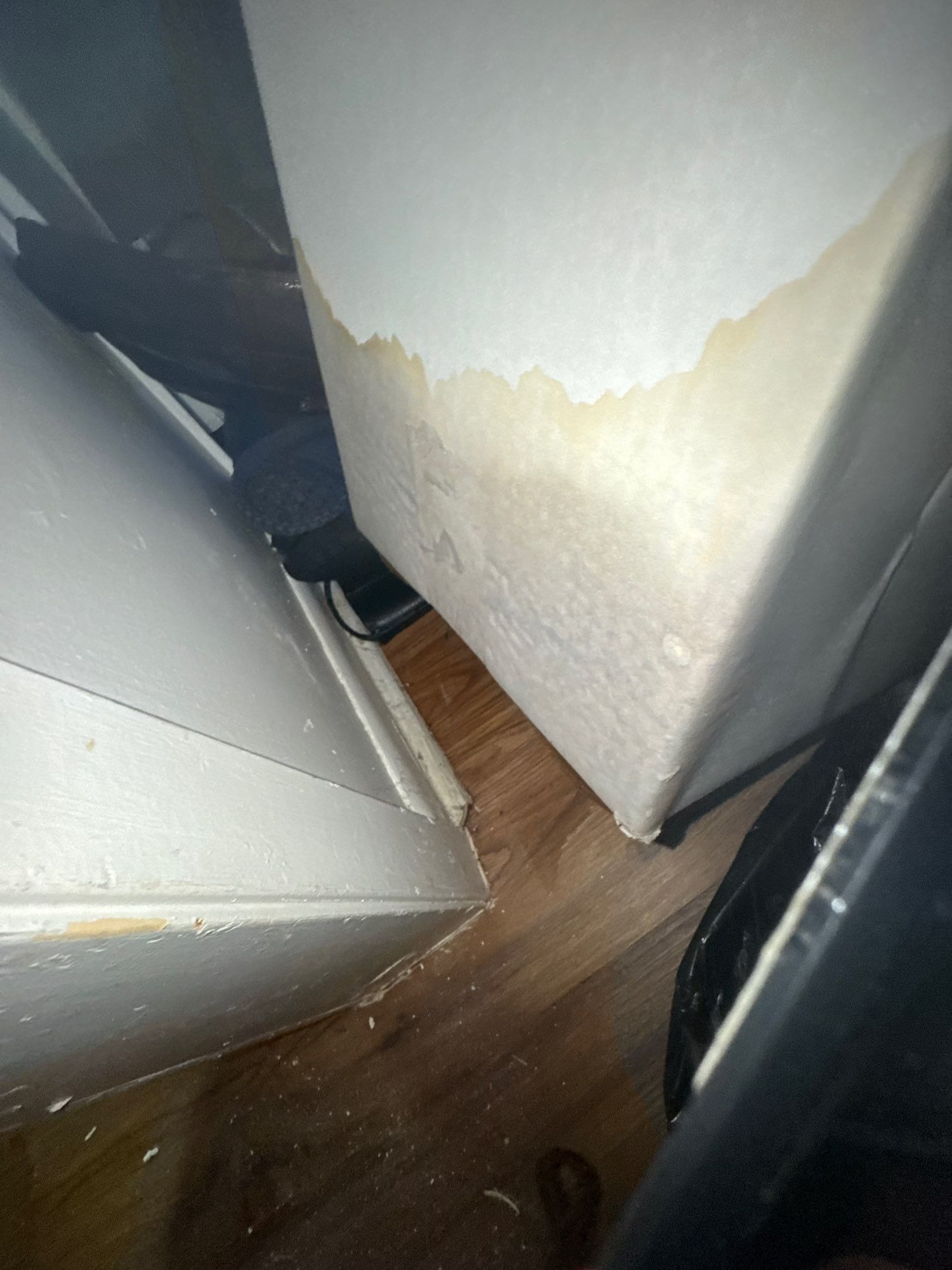
Water had been slowly leaking from the unit’s drain, traveling along the wall and pooling behind an appliance before spreading out across the flooring. You could see a visible water line along the side of the appliance where moisture had been sitting. That’s a telltale sign that the leak had been going on for a while before the homeowner noticed anything obvious.
HVAC drain line leaks are actually one of the most common sources of water damage we see from household systems, especially during Austin’s long, humid summers when AC units run constantly.

What Our Inspection Revealed
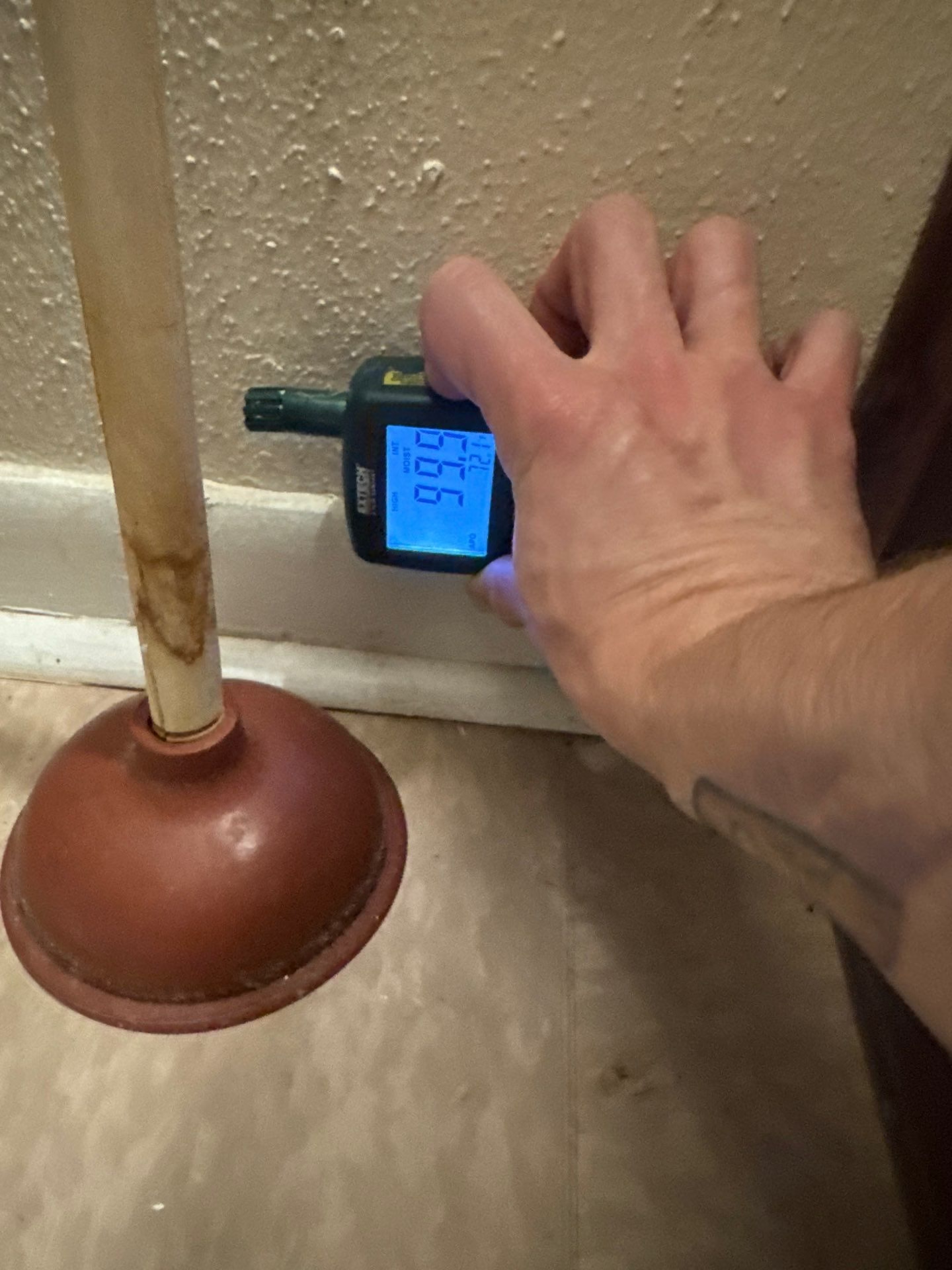
Once we identified the HVAC drain line as the culprit, our technicians pulled out the thermal imaging cameras and moisture meters to map the full extent of the damage. This step is critical. Moisture can travel through drywall, insulation, and subflooring in ways you’d never expect.
The thermal scan of the room walls showed temperature variances that indicated trapped moisture well beyond the visible stain. Our baseboard moisture readings confirmed elevated levels in areas that looked completely dry to the naked eye. According to the IICRC S500 Standard for water damage restoration, thorough moisture mapping is essential for determining the correct scope of work and preventing secondary damage like mold growth.
The drain line penetration point was particularly concerning. Water had been wicking into the wall cavity around the pipe, creating a hidden pocket of moisture that could have easily led to mold if left unaddressed. The EPA recommends addressing moisture problems within 24 to 48 hours to prevent mold from taking hold, and this leak had clearly been active longer than that.

Drying, Demo, and Getting Things Back to Normal
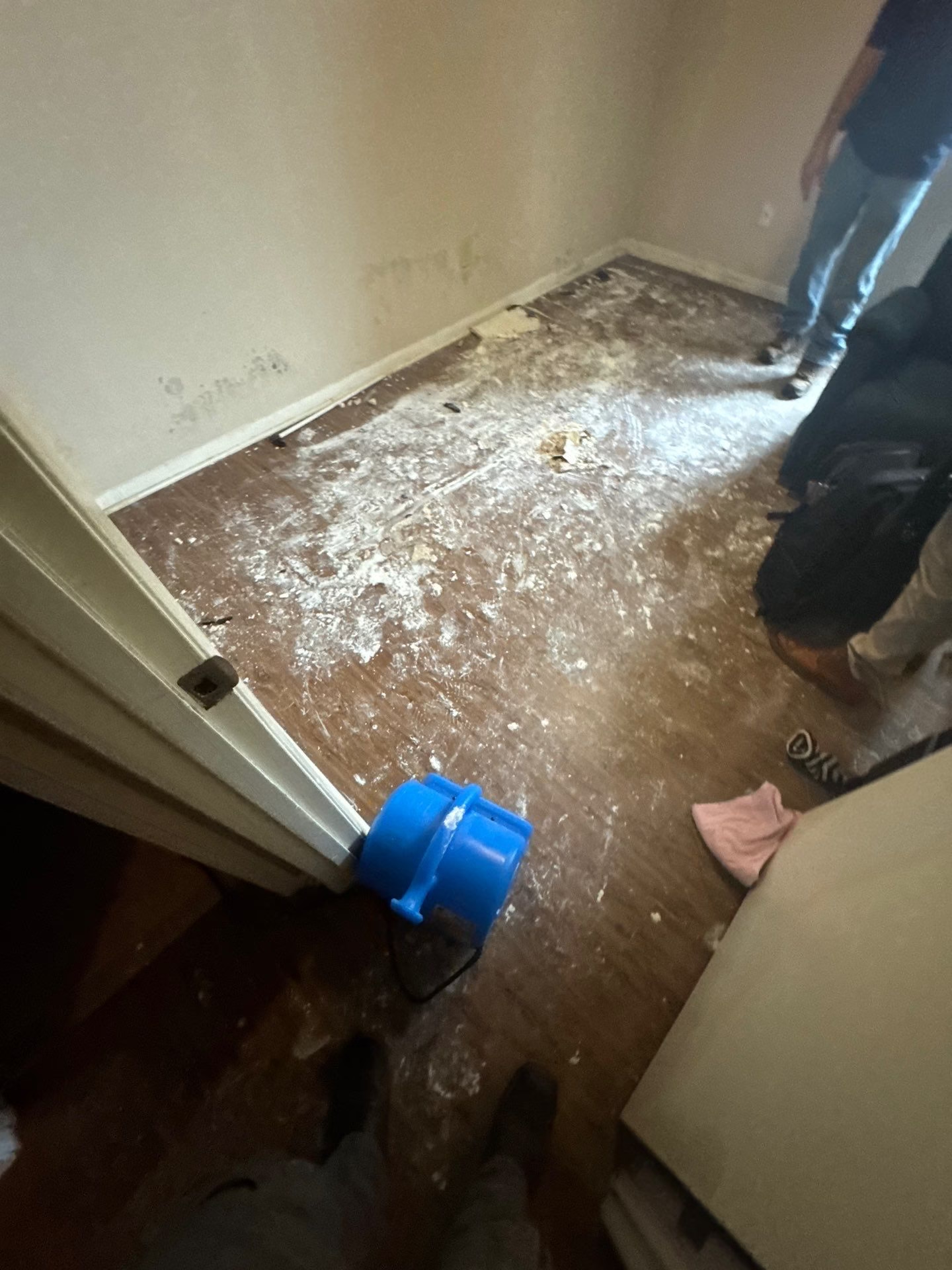
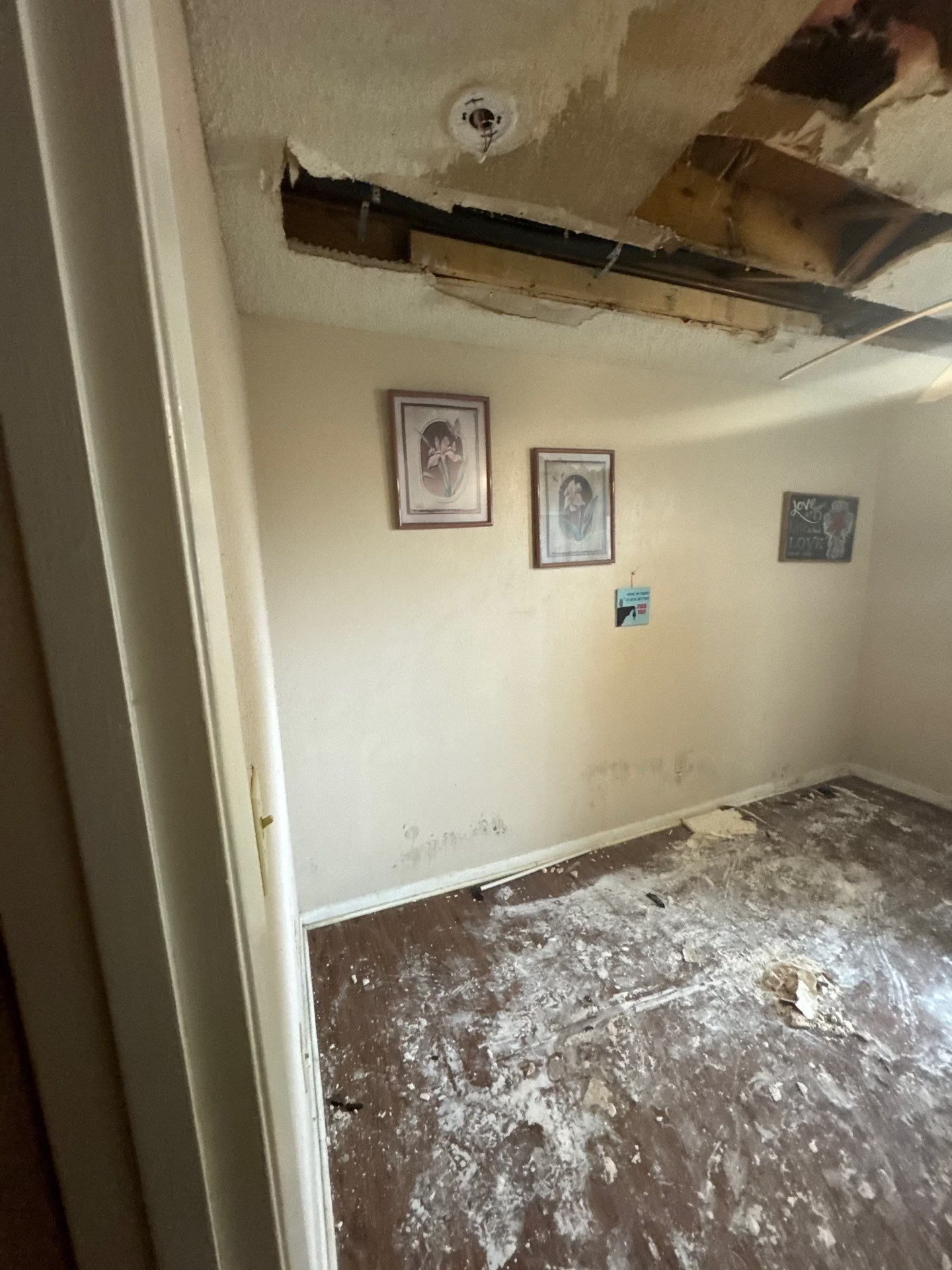
With the full scope mapped out, our team got to work. The ceiling in the affected area needed to be opened up to expose the damage and allow proper airflow for drying. Sections of drywall and insulation that had absorbed moisture were removed to prevent any chance of mold growth requiring professional remediation down the road.
We placed commercial air movers and dehumidifiers throughout the hallway and affected rooms. If you’ve ever had restoration work done, you know the sound. It’s not exactly peaceful, but those machines are doing important work, pulling moisture out of structural materials and getting everything down to safe, dry levels.
Our technicians monitored moisture readings daily until everything tested within normal range. Rushing this step is one of the biggest mistakes in water damage restoration. If you seal things back up before materials are fully dry, you’re just setting yourself up for mold problems from lingering moisture.

Why HVAC Leaks Catch Georgetown Homeowners Off Guard
Georgetown sits right in the heart of Central Texas, and our homes run AC hard from April through October. That means HVAC condensate drain lines are working overtime, and when they clog, crack, or disconnect, the water has to go somewhere. Often it goes straight into walls, ceilings, or flooring before anyone realizes there’s a problem.
A few things you can do to stay ahead of it:
- Have your HVAC system serviced before summer and check the condensate drain line for clogs or cracks
- Look for water stains near your HVAC closet, utility room, or anywhere drain lines run through walls
- If you notice musty smells or unexplained humidity spikes indoors, don’t ignore them
Catching a small leak early can save you from a much bigger (and more expensive) restoration project. If you’re curious about what those costs look like, we put together a breakdown of typical water restoration costs that’s worth a read.
Dealing With Water Damage in Georgetown or the Austin Area?
Our team at Austin Fire & Flood is available 24/7 for emergencies. We’re IICRC certified, locally owned, and we handle everything from water extraction to full rebuild, all under one roof. We also work directly with your insurance company so you don’t have to navigate the claims process alone.
Free inspections available • Insurance claims handled directly • 24/7 emergency response